Vintage Levi's denim: how to spot the value
How to spot valuable vintage Levi's denim: model numbers, the red tab, the patch, selvedge and made in markers, and what really drives the value.
What it is, and why it sells
Levi’s is the denim every reseller learns first, because the good vintage pieces are genuinely sought after and the details that drive value are learnable. A modern pair off the high street is worth modest money. An older, well made pair in the right cut can be worth a great deal more, and the difference is all in the detail. Learn to read a pair of Levi’s and you can spot value on a rail in seconds.
How to spot the good one
Start with the model number on the back patch. The 501 is the classic straight leg button fly and the one most buyers search for, but 505, 517, and others have their own followings. Then look for the age markers:
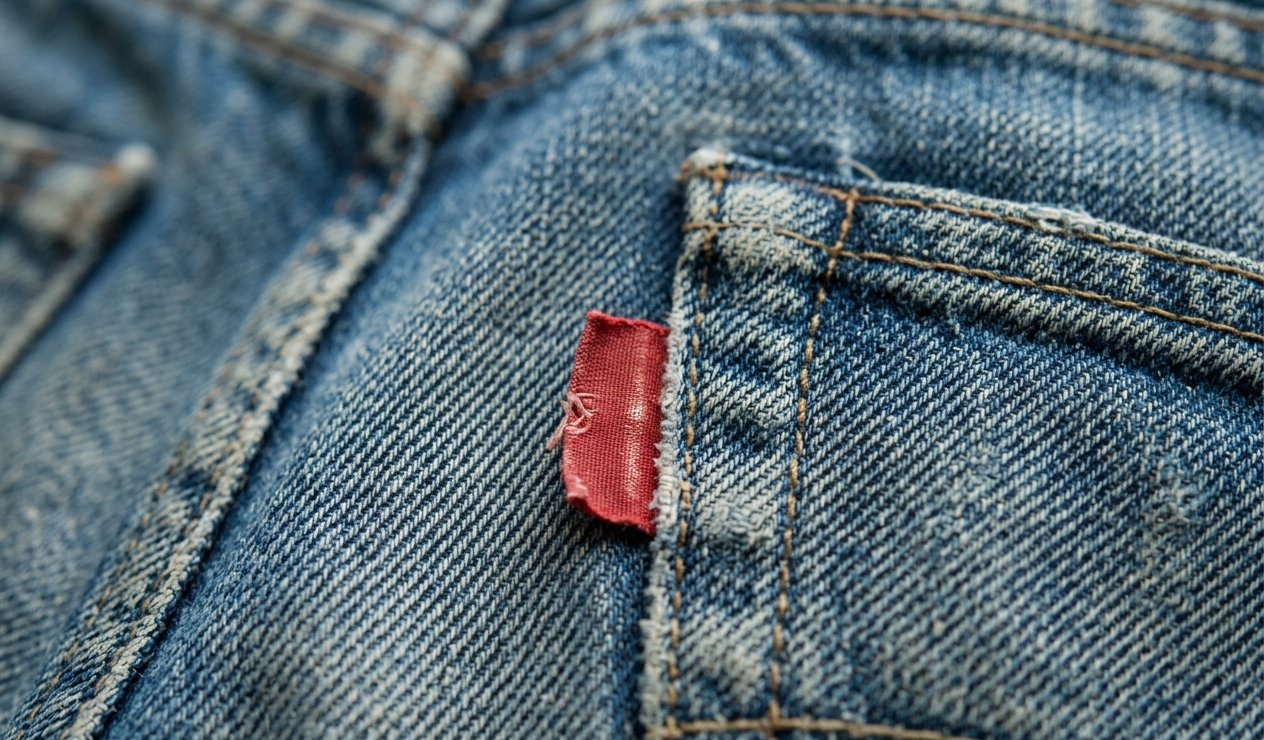
- The red tab. A capital E in “LEVI’S” on the small red tab (the “Big E”) points to a pair made before roughly 1971 and is a strong sign of age and value. A lower case e is newer and far more common.
- The back patch. A two horse patch that mentions a single price or specific wording can date a pair. A leather patch tends to be older than a printed card one.
- Selvedge. Turn up the hem and look at the inside seam. A clean, self finished edge, often with a coloured line, is selvedge denim, woven on older style looms and prized by buyers.
- Made in markers. Older USA made pairs generally carry more value than later overseas production, though there are exceptions.
- Stitching and rivets. Hidden back pocket rivets and a single stitched back pocket are older traits worth knowing.
Always check the internal tag for the actual waist and length, because vintage sizing runs differently and the number on the patch is not the modern fit.
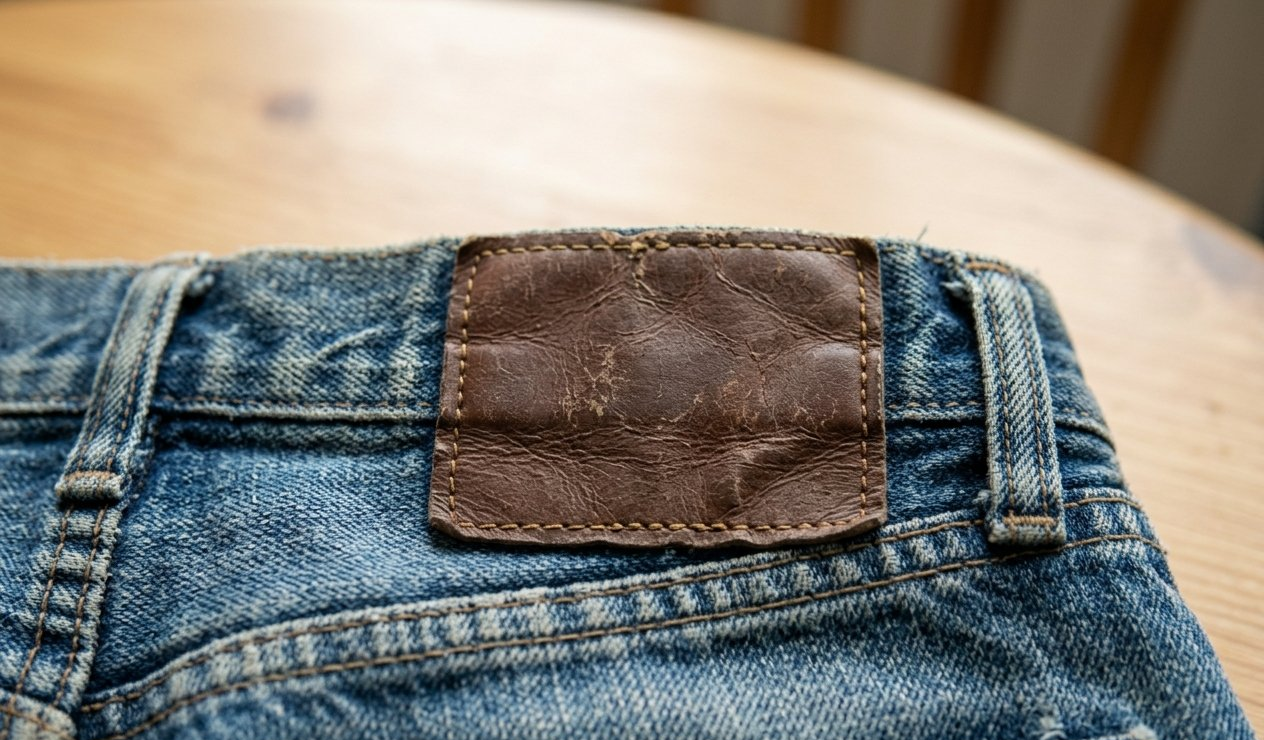 A leather patch tends to be older than a printed card one. The shape and wear are what you read, not the branding.
Condition: what helps, what hurts
Honest wear is part of the appeal with vintage denim, and a bit of fade or a soft feel can add character that buyers pay for. What hurts is damage that stops the jeans being worn: crotch blowouts, large unfinished holes, a broken fly, or heavy staining. Light repairs and honest fading are usually fine. Photograph every flaw, because surprises cause returns.
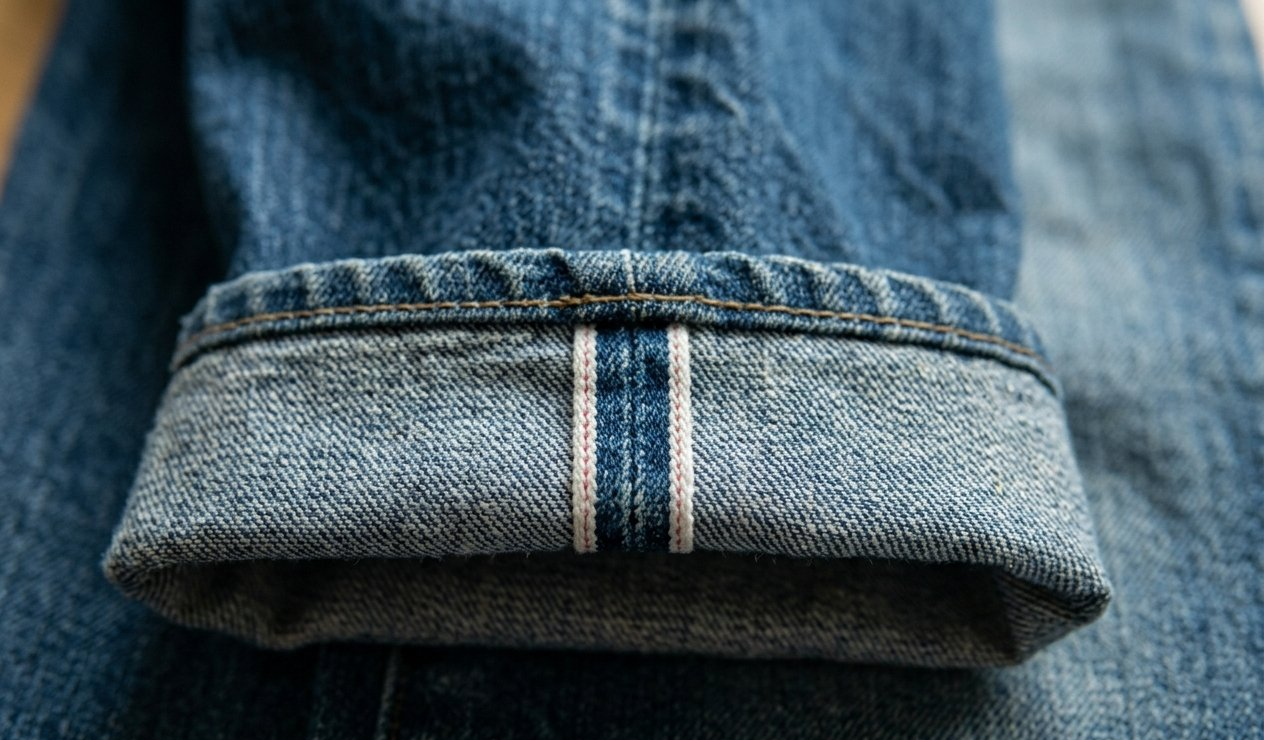 Turn up the hem. A clean self finished edge with a coloured line is selvedge, woven on older style looms and prized by buyers.
What drives the value
Age, cut, condition, and how searched for the model is all pull the value up or down. An early Big E selvedge pair in a wearable waist sits at the top. A common modern cut in a hard to wear size sits at the bottom. Two pairs that look similar on a rail can be worth very different amounts once you read the details above, which is exactly why you check before you commit.
A quick authenticity check
Vintage Levi’s is widely faked and reproduced, so treat anything that looks too clean for its claimed age with care. Look at the consistency of the stitching, the feel and weight of the denim, and whether the tab, patch, and internal tags agree with each other on age. If something does not line up, treat it as a reason to pause, not proof either way. The spotting fakes guide goes into this in more detail.
Deteqt it
Reading the details tells you what you are holding. It does not tell you what it is worth today, and prices for vintage denim move with demand. So before you buy or list, deteqt the exact pair. Your Valuation gives the most you should pay, a target sell price built on real sold prices, your profit after fees, and where that pair sells best. Know the number before you commit, not after.